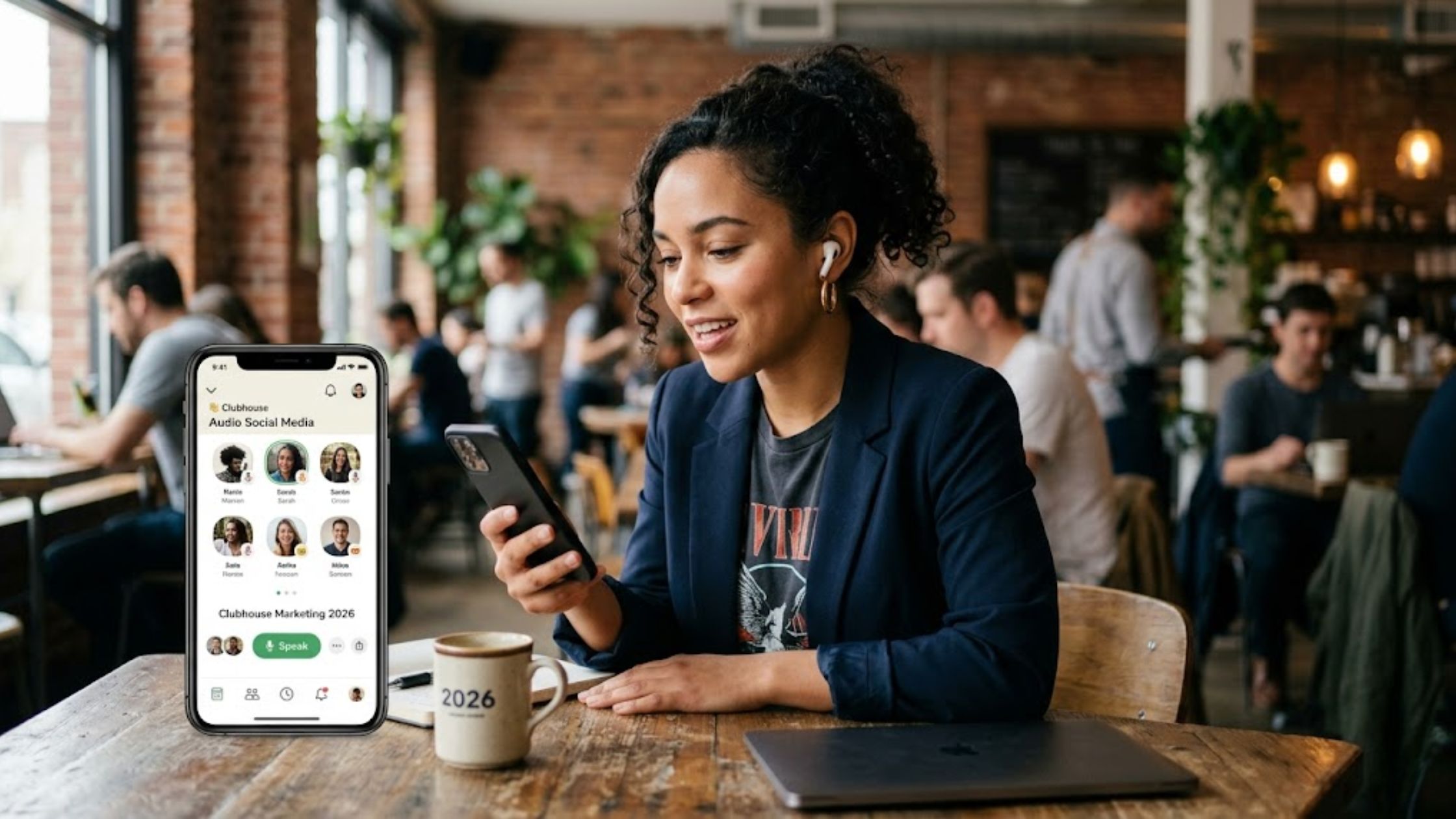
Clubhouse Marketing in 2026: Is Audio Social Media Still Worth Your Time?
You have probably heard that Clubhouse is dead. And honestly, you are not entirely wrong to think that. The app that dominated tech Twitter in early 2021 has shed millions of users. But here is what most marketing blogs will not tell you: a smaller, quieter Clubhouse may actually be more useful for your brand in 2026 than it ever was at its peak.
What Actually Happened to Clubhouse?
Clubhouse launched in 2020 during a moment when people were starved for human connection. By early 2021, it had 10 million weekly users and a waiting list that made it feel exclusive. Elon Musk hosted rooms. Oprah dropped in. Venture capitalists discussed deals in real time.
Then Twitter launched Spaces. Facebook launched Live Audio Rooms. Spotify bought Greenroom. The audio social space became crowded almost overnight. Clubhouse lost the exclusivity that made it magnetic.
By 2023, active users had dropped significantly. By 2025, the company quietly laid off a large portion of its team. The app was rebuilt with a smaller, more focused product. Today in 2026, Clubhouse looks nothing like it did at its peak. It is leaner, slower, and serving a very specific type of user.
A smaller audience is not always a failure. Sometimes it is a filter.
Who Is Still on Clubhouse in 2026?
This is the question most marketers forget to ask. Before writing off any platform, you need to know who stayed. On Clubhouse today, the remaining active base skews toward:
• Professionals in finance, law, consulting, and tech who prefer nuanced conversation over short-form video
• Niche community builders running rooms around specific interests like indie publishing, Web3 policy, mental health advocacy
• International users, particularly in parts of Africa, South Asia, and the Middle East where audio content has strong cultural traction
• People who are genuinely tired of algorithmic feeds and want real-time, unscripted discussion
If your audience overlaps with any of these groups, Clubhouse is not dead for you. It is just smaller and more intentional.
The Real Case for Audio Social Media Marketing in 2026
1. Trust builds differently in audio
When someone hears your voice, their brain processes it differently than text. There is no editing a live audio conversation in the same way you can polish a LinkedIn post. That rawness builds credibility faster. For coaches, consultants, founders, and educators, this is still one of the best formats available for positioning yourself as a real person with real opinions.
PRO TIP
Host a weekly room on a specific topic rather than a general one. 'Growth Marketing Q&A' is forgettable. 'Finding Your First 100 B2B Customers Without Ads' is something people will set a reminder for.
2. The algorithm problem does not exist here
On Instagram and TikTok, your content competes against the entire platform for attention. On Clubhouse in 2026, active listeners are already in the app looking for conversations. There is no newsfeed to fight through. If your room title is relevant and your timing is right, people show up.
3. Live audio creates shareable moments
The best rooms on Clubhouse produce clips, quotes, newsletters, and even podcast episodes. One good conversation can be repurposed into weeks of content. Think of Clubhouse not as the destination but as a content production engine.
4. Niche community building is where it shines
Mass-market brands do not belong on Clubhouse in 2026. But if you serve a specific professional or interest group, a consistent room schedule can make you the go-to voice in your niche. That recognition compounds over months.
When Clubhouse Does NOT Make Sense
Let us be direct. There are clear situations where spending time on Clubhouse is a poor use of your marketing resources:
• Your target audience is primarily Gen Z or under 25 , they are on TikTok, YouTube Shorts, and Snapchat
• You are selling a product that requires visual demonstration
• You need fast-growing follower counts for vanity metrics or investor decks
• You cannot commit to a consistent weekly room schedule , inconsistency on Clubhouse is invisible, not forgiven
Clubhouse Social Media Strategy That Actually Works in 2026
Step 1: Define your room niche tightly
Do not host a room called 'Marketing Tips.' Host 'Email Marketing for Independent Consultants.' The specificity is what attracts the right audience and repels the wrong one.
Step 2: Show up on a fixed schedule
Tuesday evenings. Thursday mornings. Whatever fits your audience. Pick a time and stick to it for at least 90 days before judging results. Clubhouse rewards consistency with discoverability.
Step 3: Invite guests who bring their own audience
Co-hosting with someone who has an existing Clubhouse following is the fastest way to grow your room. One strong guest can double your room size overnight.
Step 4: Record and repurpose
Clubhouse allows room recordings. Every session should become a podcast episode, newsletter summary, or LinkedIn post. The live event is just the first use of the content.
Step 5: Connect outside the platform
Always give listeners a reason to follow you somewhere with a stronger algorithmic reach. Drop your newsletter link, Instagram handle, or free resource in the room description. Clubhouse is the introduction. Everything else is the relationship.
Audio Social Media Trends Worth Watching in 2026
Beyond Clubhouse, the broader audio social media marketing space is shifting in a few interesting ways:
• Twitter/X Spaces continues to attract political and financial commentary rooms with large live audiences
• LinkedIn Audio Events have quietly grown among B2B professionals who want a more structured alternative to Clubhouse
• Spotify has pulled back from live audio, but podcast-first brands are using dynamic audio ads to target audio listeners across platforms
• AI-generated audio summaries are becoming a distribution format, not just a content tool brands that create good live audio will have their best moments surfaced by AI tools
Audio is not dead. It just grew up and got more selective about who it lets in.
The Honest Verdict
Clubhouse is not for everyone in 2026. The growth-hacking, follower-chasing version of Clubhouse is long gone. What remains is a relatively small, relatively thoughtful platform where consistent audio creators can build real authority with a specific audience.
If you are a personal brand, a niche B2B service, or a community-driven organization, the time investment can still generate strong returns especially if you repurpose the content aggressively.
If you are a mass-market consumer brand looking for reach, skip it. Your time is better spent on Reels, TikTok, or YouTube.
The question was never whether Clubhouse is worth your time. The question is whether your audience is still there. Go check. You might be surprised.
Q1: Is Clubhouse still active in 2026?
Yes, Clubhouse is still active but significantly smaller than its 2021 peak. The platform rebuilt itself with a leaner product and serves a more focused user base, particularly professionals and niche community builders. It is functional and in use, just not mainstream.
Q2: Is audio social media marketing still effective?
It depends on your audience and goals. Audio social media marketing works very well for building trust, positioning expertise, and serving niche professional communities. It is less effective for driving volume-based metrics like impressions or follower counts quickly.
Q3: What are the best social media platform trends to follow in 2026?
Short-form video continues to dominate for discovery. Audio formats, including podcasts and live audio rooms, lead in trust-building. AI-powered content personalization is reshaping how platforms surface content. Community-first platforms are outperforming broadcast-first ones for engagement quality.
Q4: Should my brand invest time in Clubhouse instead of TikTok or Instagram?
Not instead in addition to, and only if your audience is there. Clubhouse suits B2B brands, consultants, educators, and niche service providers. TikTok and Instagram are still essential for broader consumer audiences. Treat each platform based on where your specific audience spends time.
Q5: How often should I host Clubhouse rooms for marketing?
Once a week is the sweet spot for most creators starting out. Consistency matters more than frequency. A reliable weekly room builds a predictable audience habit. Daily rooms risk burnout and diluted content quality unless you have a team supporting the effort.
Q6: Can small businesses benefit from Clubhouse marketing in 2026?
Yes, especially service-based small businesses like coaches, freelancers, consultants, and local professionals. Clubhouse lets you demonstrate expertise live, which builds trust faster than most other formats. A small but engaged room of the right 30 people can be worth more than 30,000 algorithm-fed impressions.