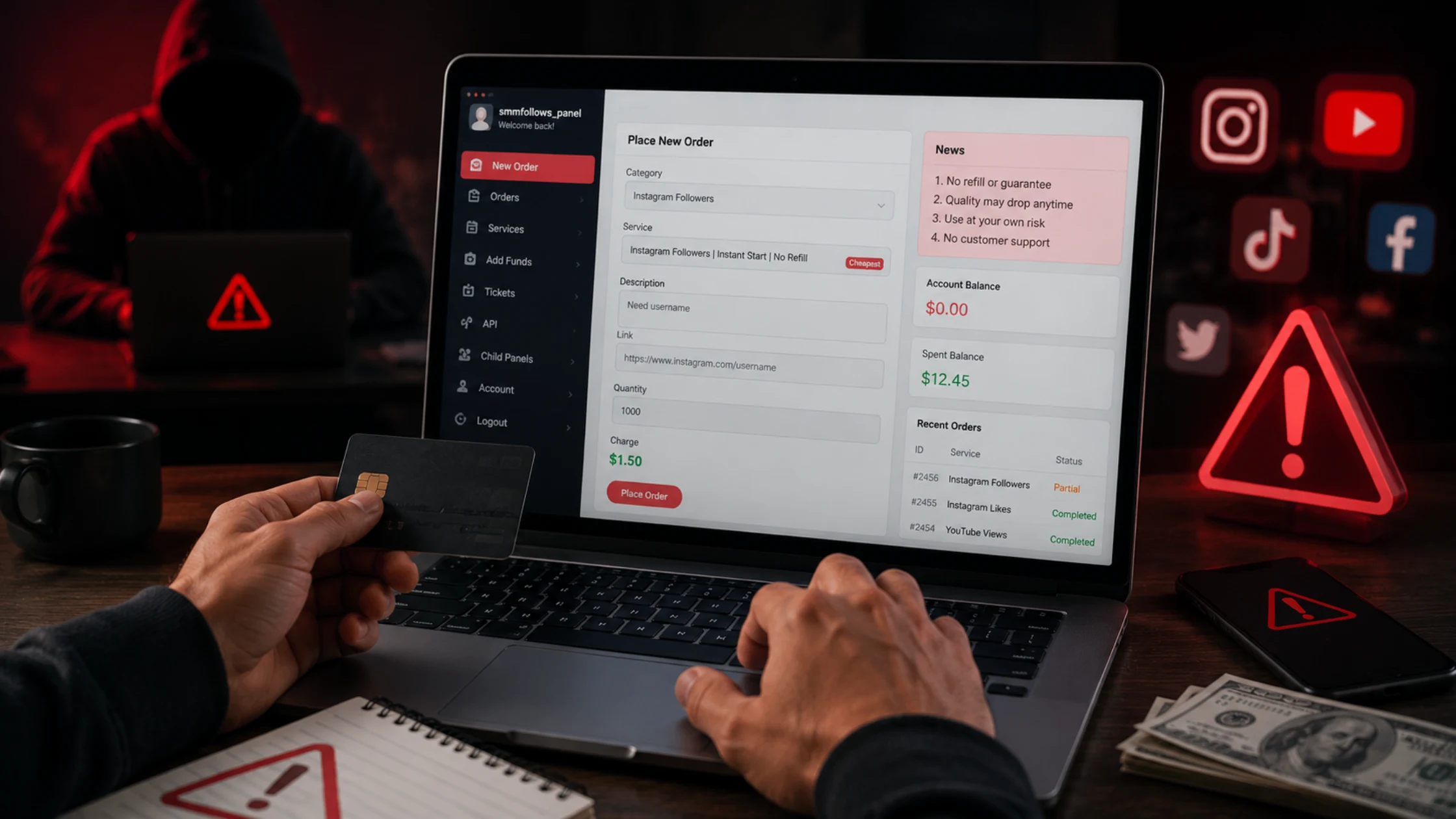
How to Spot a Fake SMM Panel and Avoid Getting Scammed
The social media marketing (SMM) panel industry has grown fast, and so has the number of people trying to exploit it. For every legitimate provider offering real engagement, follower growth, or promotion services, there are several fake or unreliable panels waiting to take your money and disappear. If you have ever searched for how to identify a fake SMM panel, you already know how confusing the market can look from the outside — glossy websites, unbelievable prices, and promises of instant results are everywhere.
This guide breaks down the most common smm panel scam warning signs, explains why they happen, and gives you a practical, trusted smm panel checklist so you can protect your budget and your social accounts before you place another order
Why Fake SMM Panels Are Such a Common Problem
SMM panels are attractive to scammers for a simple reason: the barrier to entry is low. Anyone can copy a panel script, put up a cheap-looking website, and start accepting payments within a day. Because the service is digital and often prepaid, a fraudulent operator can collect money from dozens of customers and vanish before anyone notices a pattern.
On top of that, the market moves quickly. New panels launch every week, older ones shut down without warning, and reseller networks make it hard to tell who is actually delivering the service versus who is just reselling someone else's panel with a markup. This constant churn is exactly what makes fake providers so hard to spot at first glance.
Common SMM Panel Scam Warning Signs
Before you commit any budget to a provider, watch for these red flags. On their own, one issue might be explainable — but two or three together are a strong signal that something is wrong.
1. Prices that are far below market rate
If a panel is offering 10,000 followers or likes for a price that seems impossible compared to every other provider, it usually means the traffic is fake, the order will never complete, or the panel plans to disappear once it collects enough prepaid balance.
2. No working support channel
Legitimate panels give you more than one way to reach them — live chat, a ticket system, or a responsive Telegram/Skype channel. Fake panels often list contact details that go unanswered, or they route everything through a single anonymous account that disappears the moment there's a dispute.
3. No API documentation
Almost every established SMM panel offers a documented API for resellers and bulk buyers. If a site claims to be a serious provider but has no visible API page, or the documentation is broken and outdated, that's a sign the panel isn't built for long-term operation.
4. Fake or copy-pasted testimonials
Watch for testimonials that use stock photos, generic first names, or wording that is copied word-for-word from other panel websites. A quick reverse image search on a testimonial photo often reveals it was lifted from an unrelated stock site.
5. No refund or order-completion policy
If there is no clear policy explaining what happens when an order partially completes, drops, or fails outright, you have no protection if something goes wrong. Reliable panels are upfront about refill guarantees and refund timelines.
6. Domain and branding red flags
A domain that was registered only weeks ago, frequent name changes, or a site that looks like a near-identical clone of a well-known panel are all signs the operator is trying to borrow trust they haven't earned. Checking domain age and history takes a few minutes and can save you from a bad decision.
7. Payment methods with no buyer protection
Panels that only accept irreversible payment methods, such as certain cryptocurrencies or direct bank transfers, and refuse any other option, make it very difficult to dispute a charge if the service is never delivered.
A Trusted SMM Panel Checklist Before You Buy
Use this checklist every time you evaluate a new provider, especially if you are managing budgets on behalf of clients or a business.
● Check how long the domain has been registered and whether the site has a real business history.
● Look for transparent pricing that lines up with the general market range for that service.
● Confirm there is a working API with documentation, even if you don't plan to use it yourself.
● Test the support channel with a real question before you pay anything.
● Search the panel's name along with the word 'review' or 'scam' to see what existing customers say.
● Read the refund, refill, and order-completion policy in full before funding your account.
● Start with a small test order instead of a large bulk purchase.
● Verify that payment options include at least one method with dispute protection.
● Check whether the panel has an active presence on independent forums or communities, not just its own website.
● Avoid panels that pressure you to deposit a large balance immediately to unlock 'better rates.'
How Fake SMM Panels Can Hurt More Than Your Wallet
The financial loss from a fake panel is only part of the risk. Many low-quality or fraudulent panels rely on bot networks, hacked accounts, or engagement pods that violate platform terms of service. Ordering followers, likes, or views from these sources can trigger spam detection systems on platforms like Instagram, YouTube, or TikTok, leading to shadowbans, reduced reach, or even permanent account suspension.
For agencies and freelancers managing client accounts, this risk is even higher. A client's account getting flagged because of a shady panel doesn't just cost money — it damages trust and can end a working relationship. This is why vetting a provider matters just as much for the safety of the accounts you manage as it does for protecting your budget.
There's also a data privacy angle that's easy to overlook. Some fake panels ask for account passwords or excessive permissions under the guise of 'verification' or 'faster delivery.' A trustworthy panel never needs your social media password to deliver followers, likes, or views — if a provider asks for this, treat it as an immediate disqualifier.
What to Do If You Think You've Been Scammed
If you've already paid a panel that stopped responding or delivered nothing, act quickly. Contact your payment provider to see whether a chargeback or dispute is possible, especially if you paid by card or a service like PayPal. Document everything — screenshots of the order, payment confirmation, and any messages exchanged — since this evidence matters if you need to escalate a dispute.
It's also worth reporting the panel in relevant SMM communities and forums. Other marketers rely on shared experiences to avoid the same providers, and a clear, factual report can prevent someone else from losing money to the same operator.
Choosing a Provider You Can Rely On
The safest approach is to treat SMM panel selection the same way you'd evaluate any other vendor: check their track record, start small, and scale up only once they've proven reliable over multiple orders. A provider that is transparent about pricing, has responsive support, and stands behind its delivery is always a safer long-term choice than one offering the cheapest numbers on the page.
Fake panels rely on urgency and unbelievable pricing to get a quick payment before anyone asks too many questions. By slowing down, running through the checklist above, and paying attention to the warning signs, you can avoid becoming another cautionary story and instead build a dependable, long-term relationship with a provider that actually delivers.
Is it illegal to use an SMM panel?
Using an SMM panel isn't illegal in most regions, but it can violate the terms of service of the platform you're promoting on. The legal risk with fake panels usually comes from payment fraud or misuse of personal data, not from the act of buying engagement itself.
How can I test a new panel safely?
Place a small, low-cost order first and monitor how it delivers, how fast support responds, and whether the results match what was advertised. Only increase your spending once a panel has proven reliable across a few small orders.
Do trusted panels ever have downtime or delays?
Yes. Even reliable panels experience occasional delays due to platform restrictions or supplier issues. The difference is communication — a trustworthy provider will post status updates and respond to tickets, while a fake one simply goes silent.
Can a fake SMM panel steal my personal or payment information?
Yes. Some fraudulent panels exist purely to harvest card details or account credentials rather than deliver any service at all. Avoid entering payment information on sites without HTTPS, a clear privacy policy, or a legitimate-looking checkout process, and never reuse your social media password anywhere else.
Why did my order start well but then stop completing?
This is a common tactic among unreliable panels — they deliver a small portion of the order to appear legitimate, then quietly stop once you've stopped watching closely. If this happens repeatedly with partial or stalled orders, treat it as a warning sign and move your remaining budget to a different provider.
Are cheap SMM panels always fake?
Not necessarily — some legitimate panels offer competitive pricing through bulk supplier deals. The difference is context: a genuinely low-cost panel will still have working support, clear policies, and consistent delivery. It's the combination of unusually low prices with missing documentation, no support, or no reviews that signals a scam, not low pricing alone.